Why Millions Cry When They See the Kaaba for the First Time
There's a moment that millions of Muslims carry inside them like a secret — a memory so overwhelming that some struggle to describe it even decades later.
They were walking through a corridor, or rounding a corner, or descending a staircase. And then, without warning, it appeared.
The Kaaba.
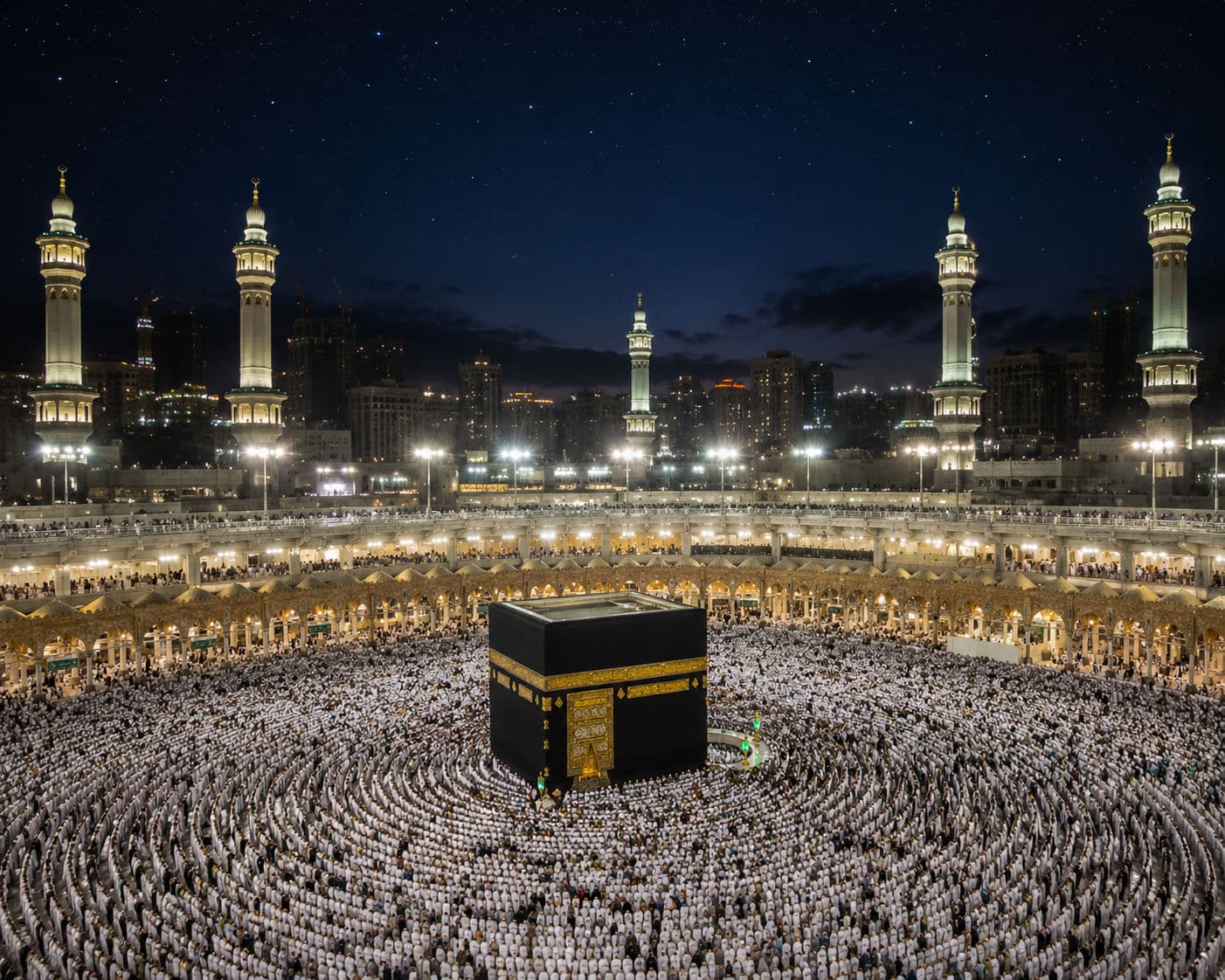
Simple. Dark. Ancient. Draped in black silk embroidered with gold. Surrounded by the white ocean of thousands upon thousands of worshippers moving around it in a slow, breathtaking circle. And something inside them — something they didn't quite have words for — broke open.
The tears came. Unstoppable. Unplanned. Real.
Why? Why does a cube-shaped stone structure — no stained glass, no towering spires, no elaborate iconography — move human beings to their knees, emotionally and spiritually, in a way that almost nothing else in the world does?
That question deserves an honest, thoughtful answer. Not a sermon. Not a simplification. But a genuine attempt to understand one of the most profound emotional experiences in human religious life.
The Kaaba Is Not What You Think It Is
It's Not a Building You're Seeing
When a Muslim first lays eyes on the Kaaba, they are not — not really — looking at a building.
They are looking at the convergence point of a billion prayers. Every salah ever offered, for over fourteen centuries, has been directed toward this single point on earth. Five times a day, across every time zone and every continent, Muslims turn to face it. They may never have stood here. But they have always faced here.
So when they finally arrive and see it with their own eyes, there's a recognition that transcends the physical. Something in the soul says: I know this place. I have always faced this place. I have come home.
That sense of return — of arriving somewhere you've been turning toward your whole life — is almost impossible to prepare for emotionally. And so when it hits, it hits hard.
A Place That Exists Outside Ordinary Time
The Kaaba is, in Islamic belief, the first house of worship on earth. It was built by Prophet Ibrahim (AS) and his son Ismail (AS) — the same Ibrahim whose story defines Eid al-Adha, whose faith Islam holds as its spiritual touchstone. It was rebuilt, restored, and protected across millennia. The Prophet Muhammad (PBUH) himself walked around it. The earliest Muslims faced persecution rather than abandon it.
This isn't just ancient history. It's lived spiritual memory, passed down through generations, embedded in the prayers and longing of every Muslim family line.
When a person stands before the Kaaba, they are standing in the same spot where the Prophet stood. Where the Companions stood. Where pilgrims from every era of Islamic history stood.
Time folds. And the weight of that is genuinely staggering.
What Pilgrims Actually Feel in That First Moment
The Body Responds Before the Mind Can Catch Up
Ask anyone who has made Hajj or Umrah, and they'll tell you the same thing in different words: the reaction was involuntary.
A woman from Malaysia described it as feeling like every wall she had ever built around her heart collapsed simultaneously. A father from Lagos said he had been trying to be strong for his wife and children — but the moment he saw it, his legs buckled. A young man from London who had grown up secular and returned to Islam in his twenties said he had not expected to cry, because he was "not really a crier" — and yet he wept so hard he had to stop walking.
These are not unusual reactions. They are, in fact, the norm.
The emotional experience seems to operate on several levels at once — which is perhaps why it's so overwhelming. The mind, the heart, and the body all respond together, and not one of them is ready for it.
The Release of a Lifelong Longing
There's a particular kind of longing in Islamic spirituality called shawq — a yearning, a deep ache of desire for something sacred. Muslims are taught to long for the Kaaba. They pray toward it. They hear it described in Quranic recitation. They grow up watching elderly relatives weep at the mere mention of it. They save for years, sometimes decades, to get there.
By the time a Muslim pilgrim arrives, they have often been carrying that longing for most of their life.
And then, suddenly, the longing is answered. The thing they have been aching toward is right there. Thirty feet away. Real. Present. Undeniably, breathtakingly real.
That release — the resolution of decades of yearning — is one of the most powerful emotional experiences a human being can have. Psychologically, spiritually, physically.
The tears are not sadness. They are the body and soul releasing something they've been holding for a very long time.
The Spiritual Architecture of the Moment
Why Sacred Places Affect Us So Deeply
Human beings are not purely rational creatures. We are also spatial, embodied, and deeply responsive to place. Certain locations carry weight — not because of their physical properties alone, but because of what they mean, what has happened there, and what they represent within the stories we live by.
For Muslims, the Kaaba is the axis of meaning itself. It is where Ibrahim prayed. Where Hajar ran between Safa and Marwa searching for water for her son. Where the Prophet Muhammad (PBUH) completed his final Hajj and delivered his farewell sermon. Where millions of Muslims, in the last moments of their lives, ask to be brought before they die.
This accumulation of meaning — historical, prophetic, personal, communal — saturates the space around the Kaaba with a spiritual density unlike anything most people have experienced before.
When you walk into the Masjid al-Haram and the Kaaba comes into view, you are not just entering a mosque. You are stepping into the center of the Islamic universe of meaning. And the human soul, which has been shaped by that meaning from childhood, responds accordingly.
The Dua That Is Accepted at First Sight
There is a well-known narration — passed down and widely held among scholars — that the dua made upon first seeing the Kaaba is accepted. Pilgrims are often reminded of this before they arrive, told to prepare a list of prayers, to think about what they will ask for.
But nearly everyone reports the same thing: when the moment came, they forgot everything they had planned to say.
They stood there, in tears, wordless.
And somehow, that felt like the most honest prayer they had ever offered.
The Kaaba and the Question of Identity
For Many Muslims, It's a Homecoming to Themselves
Muslims live, in many parts of the world, as minorities. They navigate the balance between faith and modernity, between Islamic identity and cultural belonging, between who they are spiritually and who the world expects them to be.
That navigation is not always easy. It can create a quiet, ongoing tension — a low-grade sense of being slightly out of place, of having a center of gravity that doesn't quite match the geography around you.
The Kaaba, for these Muslims, is not just a religious site. It is the place where that tension dissolves.
Surrounded by millions of people from every nation, every race, every background — all dressed in the same simple white, all oriented in the same direction, all calling out the same words — there is no minority here. No outsider. No one straddling two worlds.
There is only the ummah. One community. One qiblah. One God.
For someone who has spent their life feeling slightly between worlds, that unity can be almost unbearably moving. The tears that come are not just spiritual. They are the tears of finally, completely, belonging.
The Weight of Family Legacy
Many pilgrims carry something invisible with them to Makkah: the prayers of those who could not come.
A grandmother who spent thirty years making dua to visit the Kaaba and died before she could. A father who saved for Hajj but became ill. A mother who pressed her forehead to the prayer rug every night and whispered her longing into the carpet beneath her.
When a child — now grown — finally stands at the Kaaba, they are not standing alone. They are standing on behalf of everyone who prayed before them and didn't make it. They are completing something. Carrying something forward.
That is a sacred weight. And it often arrives, fully felt, in the moment the Kaaba comes into view.
What the Quran and the Prophet Said About This Place
"And proclaim to the people the Hajj..."
Allah's command to Ibrahim (AS) to call humanity to Hajj — recounted in Surah Al-Hajj — carries with it the implication that people would respond across time and distance, coming from every distant path.
That call has been answered, continuously, for thousands of years. Every person who has ever walked toward the Kaaba has answered it.
When a Muslim stands there for the first time, there is often an almost cellular awareness of being part of that response — of being one link in an unbroken chain of human devotion stretching back to the first house of worship on earth.
The Prophet's Own Longing for Makkah
When the Prophet Muhammad (PBUH) was forced to leave Makkah during the migration to Madinah, he stopped at the boundary of the city and turned back to look at it. According to narrations, his heart was heavy. He addressed the city directly, expressing his love for it and his grief at leaving.
This is the man who received revelation. The most honored of all creation. And even he felt the pull of Makkah like a cord around his heart.
When Muslims read this — and many have read it since childhood — it lands somewhere deep. So when they finally arrive in Makkah themselves, they arrive with his longing layered under their own. They are not just fulfilling their own desire. They are, in some way, answering the ache that he too once felt.
Beyond the First Sight: What the Experience Continues to Teach
Why the Crying Doesn't Always Stop After That First Moment
For many pilgrims, the emotion doesn't peak and then subside. It returns — at Fajr, when the Adhan echoes through the stone and air of Masjid al-Haram. During Tawaf, when the movement of thousands of people around the Kaaba creates something that feels less like a crowd and more like a single breathing organism. In the stillness of the night, when the Kaaba is illuminated against a dark sky and feels simultaneously ancient and eternal.
Each prayer offered in view of the Kaaba carries a reported multiplication of reward. But beyond that theological understanding, something else happens: praying here, in front of the qiblah you have always faced, collapses the abstraction of faith into something immediate and present.
You are no longer facing something distant. You are here. And that changes everything about how the prayer feels in your body.
What People Bring Home With Them
Pilgrims who return from Hajj or Umrah often describe a kind of clarity — a reset of priorities, a renewed sense of what actually matters. The world they left behind has not changed. Their jobs, their difficulties, their families, their daily lives are exactly where they left them.
But something inside them has shifted.
Many report a renewed desire to learn more: to understand the Quran more deeply, to improve their Arabic so they can access the words of Allah directly, to teach their children what they now feel in their bones.
This is not a coincidence. The Kaaba doesn't just move people emotionally — it motivates them. It reconnects them to why they believe, and reignites the desire to live that belief with more intention and depth.
For Those Who Have Never Been: How to Build Your Own Connection
The Kaaba Is Reachable Before You Arrive
Most Muslims will make Hajj or Umrah at some point in their lives — but not yet. And the waiting period, which can stretch years or even decades, is not empty time. It's preparation time.
The connection to the Kaaba, to Makkah, to the full spiritual weight of Islamic tradition — that can be built right now, from wherever you are.
Through the Quran:
The Quran is full of references to Makkah, to the Sacred House, to Ibrahim's prayer and Hajar's faith and the call to pilgrimage. Reading these passages — not just as religious text, but as a living connection to that place — slowly builds the emotional and spiritual relationship that eventually overwhelms people when they arrive.
When you can read the Quran in Arabic, with understanding, you're not reading about the Kaaba secondhand. You're hearing Allah describe it in His own words. That is a profoundly different experience.
Through learning Arabic:
So much of what makes the Hajj experience emotionally deep is the language. The talbiyah — Labbayk Allahumma labbayk — the Adhans echoing through Masjid al-Haram, the Quranic recitations during prayer. Pilgrims who understand Arabic describe an additional layer of meaning that is genuinely difficult to access through translation alone.
Learning Arabic, even at a basic level, is one of the most meaningful investments a Muslim can make in their relationship with Makkah — long before they ever set foot there.
Through the stories of those who came before:
Sit with an elderly pilgrim and ask them about their Hajj. Listen to the details. The weather, the crowds, the moment they first saw the Kaaba. These stories carry blessings of their own. They build longing. They build connection. They make the journey feel real and reachable.
Common Mistakes That Diminish the Experience — And How to Avoid Them
Going Without Spiritual Preparation
Hajj and Umrah are physically demanding journeys. Much of the preparation focuses on logistics: vaccinations, luggage, travel arrangements, group itineraries. All of that is necessary.
But pilgrims who go without spiritual preparation — without knowing the history, the meaning, the duas, the significance of each ritual — often report a sense of being overwhelmed in a way that feels more disorienting than moving. The emotional depth of the experience depends partly on how much you bring to it.
Invest in preparation. Learn the meaning of each rite. Study the story of Ibrahim (AS) and Hajar. Memorize the relevant supplications. Understand what you're doing and why — and the experience will return that investment many times over.
Being So Focused on the Rituals That You Forget to Feel
There's a particular kind of pilgrim — often conscientious, organized, devoted — who arrives at the Kaaba with a checklist mindset. Every prayer counted. Every ritual performed correctly. And in the effort to do everything right, they forget to simply be in the moment.
Give yourself permission to pause. To stand still. To look. To feel. The rituals matter enormously — but they exist to facilitate a connection with Allah, not to replace it.
Not Bringing the Experience Home
The most common regret of returning pilgrims is not sustaining the state they felt in Makkah. Life rushes back in. The email inbox, the commute, the noise. And slowly, the clarity fades.
Build something before you go — a habit of Quran recitation, a commitment to Arabic learning, a family practice of Islamic reflection — so that when you return, you are returning to a life already oriented toward what you felt there.
FAQ: Why Do People Cry When They See the Kaaba?
Why do people cry when they first see the Kaaba?
The reaction is layered and deeply personal. It combines the release of a lifelong spiritual longing, the overwhelming sense of being in a place of immense historical and prophetic significance, the feeling of belonging to the global Muslim community, and the recognition of a place Muslims have faced in prayer their entire lives. The tears are rarely sadness — they're often relief, awe, gratitude, and homecoming all at once.
Is crying when seeing the Kaaba a sign of strong faith?
Not necessarily — and it's important to say that. Many deeply faithful Muslims do not cry at the Kaaba, and that doesn't reflect the depth of their iman. Conversely, the emotional response doesn't always correlate with spiritual readiness. Every person's experience is different. What matters is the sincerity of the heart in that moment, not the volume of tears.
What is the significance of the first dua made upon seeing the Kaaba?
There is a widely cited narration among scholars that the dua made at the first sight of the Kaaba is among those that are answered. Pilgrims are encouraged to prepare their prayers in advance. Many report, however, that in the actual moment they were too overwhelmed to remember anything they had planned — and simply stood in tearful silence. That, too, is a form of prayer.
Can someone build a spiritual connection to the Kaaba without having visited?
Absolutely. The Quran references the Kaaba and Makkah extensively. Learning to read those passages in Arabic, studying the history and prophetic traditions related to it, and orienting one's prayer life consciously toward the qiblah all build a real, meaningful connection — long before any physical visit. Many of the most spiritually prepared pilgrims are those who spent years building that relationship before they arrived.
Why does the sight of the Kaaba feel like "coming home" to so many Muslims?
Because in a very real sense, it is. Every Muslim has been facing this single point on earth in prayer, potentially thousands of times over their lifetime. When they finally stand before it physically, the act of arrival completes something that has always been in motion. The sense of homecoming isn't metaphorical — it's the resolution of a lifelong orientation.
Do non-Muslims ever understand or feel moved by the Kaaba?
Those who have studied Islam or visited Makkah — which is accessible only to Muslims — often describe a profound sense of something powerful in the accounts of others. The universality of the emotional response — across nationalities, languages, ages, and backgrounds — speaks to something in the experience that touches on the deepest human longings: belonging, meaning, connection, and transcendence.
How can I prepare my children to understand what the Kaaba means?
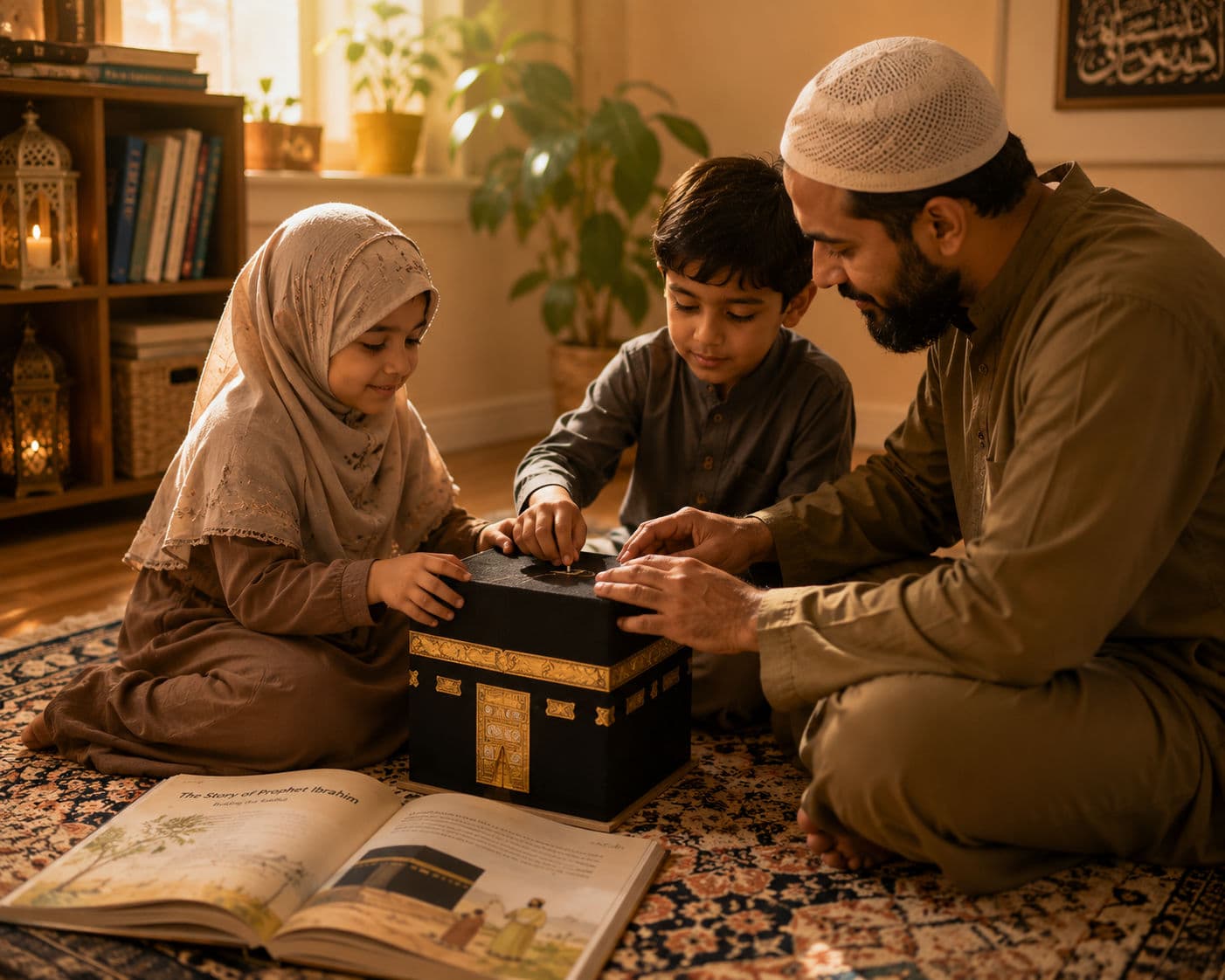
Tell them the stories — of Ibrahim (AS) and Ismail (AS), of Hajar, of the Prophet's love for Makkah. Orient their prayers consciously: explain what the qiblah is and why they face it. Help them learn to read the Quran in Arabic so that when they one day arrive, the words they hear are not foreign. And if possible, share your own feelings about the Kaaba honestly. Children absorb spiritual emotion far more readily than spiritual information.
Final Thoughts
There is something quietly extraordinary about the fact that a simple stone structure — no ornamentation, no grandeur in the architectural sense, no dramatic vista — can reduce human beings to their most vulnerable, most open, most honest selves.
The Kaaba doesn't try to impress. It doesn't need to.
It simply stands, as it has stood for thousands of years, at the center of the world's prayers. And when a human being finally arrives in its presence — carrying their history, their longing, their family's prayers, their own imperfect journey of faith — something happens that no theologian has ever fully explained and no words have ever fully captured.
They come home.
And they weep the way people weep when they finally, after a very long time, recognize where they belong.
If you carry your own longing for Makkah — if there is a part of you that aches to stand there one day and feel what so many have felt — let that longing move you now. Let it move you toward the Quran. Toward Arabic. Toward understanding what you've been facing in prayer all these years.
At Araby Academy, that journey is one we walk alongside our students every day. Through one-on-one Quran and Arabic lessons taught with care and genuine love for the tradition, we help Muslims of every age build the kind of deep connection to their faith that makes every moment of worship — here, at home, and one day, insha'Allah, in Makkah — more alive, more real, and more beautiful.
The Kaaba will be there. And so will you, insha'Allah.
May Allah grant every heart that longs for it the chance to arrive.