Ramadan in the West: Fasting, Faith, and Community Far from Muslim Lands
There's a particular kind of quiet that comes on the first morning of Ramadan when you live in the West. No cannon echoes through the neighborhood announcing the start of Fajr. No bakeries staying open all night for suhoor crowds. No streets filling with lanterns and children singing Ramadan songs at dusk. Just your alarm, your kitchen, and the darkness outside — and the deep, steady intention in your heart.
For millions of Muslims living in Western countries — the United Kingdom, the United States, Canada, Australia, Germany, France, and beyond — Ramadan is both a profoundly personal experience and a quietly countercultural one. You fast while colleagues eat lunch around you. You explain to your manager why you need a slightly different schedule. You wake before dawn in a house where you might be the only person doing so.
And yet — something remarkable happens every year. Despite every structural challenge, despite the long hours and the cultural distance from the world many of our parents or grandparents came from, Ramadan in the West is alive. It's real, it's warm, and in many ways it has developed its own distinct character — one that is neither a copy of how Ramadan looks in Cairo or Karachi, nor a diluted substitute. It is something of its own.
This article is for every Muslim in the West who has ever navigated the beautiful complexity of Ramadan far from Muslim-majority lands. It's for parents trying to pass this sacred month to their children. It's for students fasting through exams. It's for anyone who has ever stood in a masjid parking lot at Tarawih, hugging strangers who somehow felt like family, and thought: this is enough. This is more than enough.
What Makes Ramadan in the West Uniquely Challenging?
Before we talk about solutions, thriving strategies, or community building, it's worth being honest about the real challenges. Acknowledging difficulty isn't a complaint — it's the first step toward navigating it wisely.
The Long Fasting Hours: A Real Physical Test
One of the most concrete differences between fasting in a Western country versus a Muslim-majority one is geography and season. Ramadan shifts through the calendar year — and when it falls during summer months in the Northern Hemisphere, Muslims in the UK, Canada, or Scandinavia can face fasting windows of 18 to 20 hours.
That is not easy. It requires serious physical preparation, good suhoor habits, and an honest conversation with yourself about managing energy levels across a full working or school day.
For Muslims closer to the equator — in Cairo, Karachi, or Kuala Lumpur — summer Ramadan fasts typically run 13 to 15 hours. The difference of four to six hours may not sound like much on paper, but by day three of a nineteen-hour fast, you feel it.
The Workplace and School Reality
Most Western workplaces and schools are not built around Ramadan. That's simply the truth. Your lunch break still exists. Meetings are still scheduled through midday. Office birthday cake still appears in the break room on the third day of the month.
This creates a particular kind of sustained social navigation that Muslims in Muslim-majority countries rarely have to think about. It's not hostile — most colleagues and classmates are genuinely curious and often respectful. But it does require consistent energy to explain, to graciously decline, to hold your intention steady in an environment that isn't set up to support it.
The Absence of Ambient Ramadan Culture
In many Muslim-majority countries, Ramadan is literally in the air. Streets are decorated. Schedules shift. Businesses close for Iftar. Even non-practicing Muslims are immersed in the collective rhythm of the month.
In the West, you create that atmosphere yourself — or you go without it. For some Muslims, especially those who grew up in Muslim-majority countries and later moved West, this absence is one of the most disorienting aspects of the experience. The month arrives and the world outside your home doesn't change at all.
For children born and raised in the West, it can be harder still — they have no reference point for what Ramadan "feels like" at a societal level, because they've only ever experienced it as a family and community practice within a broader secular world.
How Muslims in the West Are Remaking Ramadan
Here's what the challenges leave out: the extraordinary creativity, resilience, and warmth with which Western Muslim communities have responded to every one of those difficulties. Far from producing a lesser Ramadan, the effort of creating the sacred month in an unsupportive environment has often deepened it.
The Masjid as the Heart of Everything
In the absence of ambient Ramadan culture, the local masjid becomes something extraordinary. In Muslim-majority countries, the masjid is one node among many in a Ramadan-saturated society. In the West, it becomes the central gathering point — the place where the month becomes real.
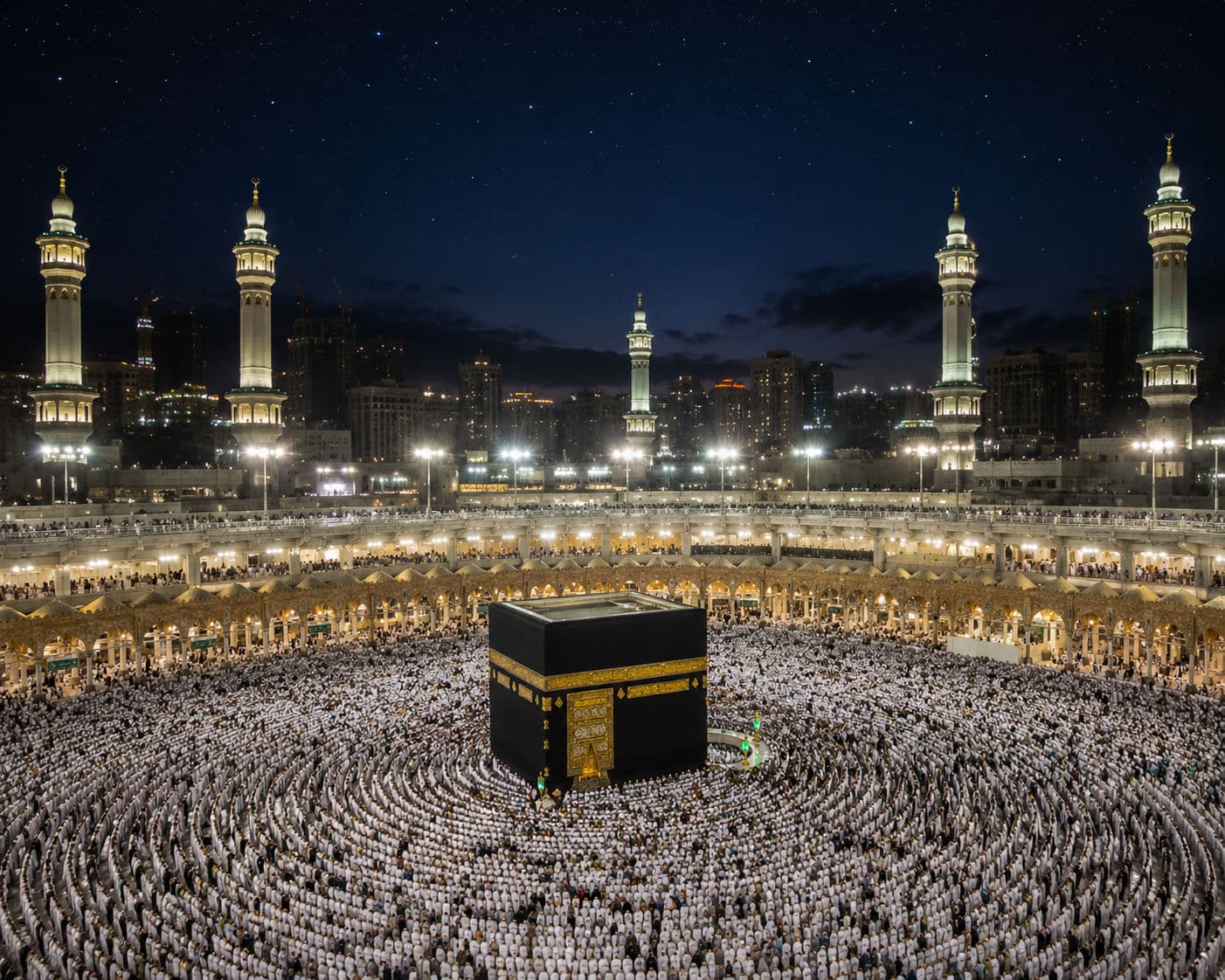
Tarawih prayers, which in some countries are a relatively routine evening activity embedded in a society already observing the month, become deeply meaningful community events in Western cities. The sight of a full masjid — people standing shoulder to shoulder across ethnicities, languages, ages, and backgrounds — is often described by Western Muslims as one of the most spiritually powerful experiences of their year.
Many masajid in Western cities have evolved their Ramadan programming significantly over the past two decades:
Nightly Tarawih with multiple recitation options for different preferences
Communal Iftar — often open to non-Muslims and the wider community
Quran completion events and nightly reminders (durus)
Youth programs running parallel to adult evening activities
Social media streaming of Tarawih for those who can't attend
Last-ten-nights intensification with I'tikaf options
The result is something genuinely remarkable: a community that has, by necessity, become exceptionally intentional about creating what surrounding society does not provide.
Finding Community Beyond the Masjid
The community of Ramadan in the West extends far beyond formal masjid structures. Muslim students' associations on campuses organize Iftar tables in dining halls. Colleagues invite each other to home Iftars. Neighbors with no shared language smile knowingly at each other in the predawn hours.
Social media has played an undeniable role in this. Muslim communities across Western countries are increasingly connected online — sharing Ramadan reflections, Quran recitations, practical tips for long fasting days, and the simple warmth of collective experience. For Muslims living in areas with very small local communities, online connection can be a genuine lifeline.
This matters especially for:
New Muslims who may not yet have a strong community network
Muslims in rural or small-town settings with no nearby masjid
University students away from family during Ramadan for the first time
Elderly Muslims with limited mobility who can't attend nightly prayers
Ramadan With Children in the West: Raising the Next Generation
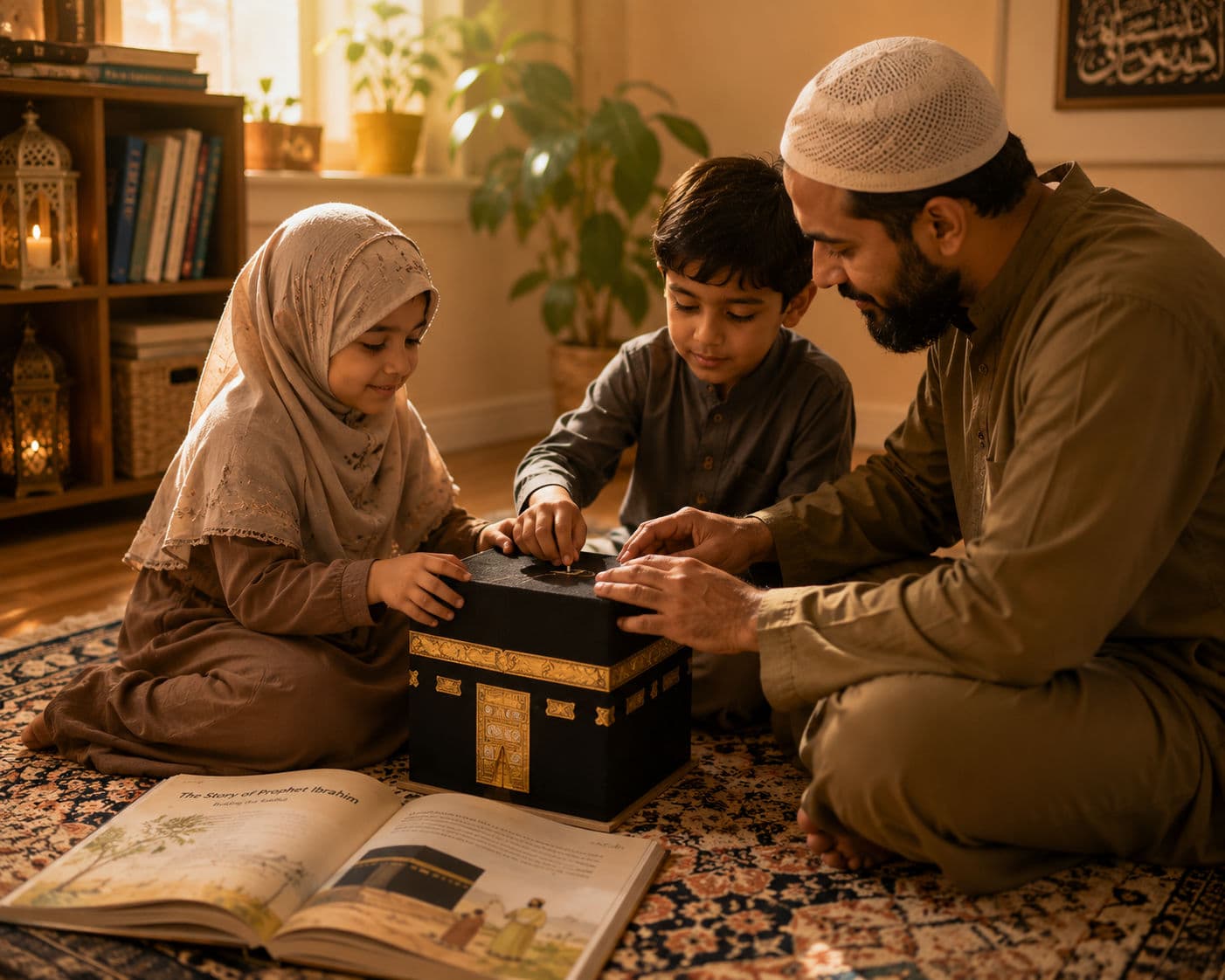
For Muslim parents in the West, Ramadan carries an additional layer of significance and responsibility. You are not just observing the month — you are transmitting it. And transmission in a context that doesn't reinforce it externally is a real and weighty task.
How Do You Make Ramadan Real for Children Born in the West?
This is perhaps the most important question Muslim parents in Western countries grapple with. Children who grow up surrounded by Ramadan culture in Muslim-majority countries absorb it almost by osmosis. Children growing up in the West need intentional construction of that experience.
Some approaches that work:
Create rituals that are uniquely yours. Many Western Muslim families develop Ramadan traditions — specific foods for Iftar, a family Quran schedule posted on the fridge, special decorations that only come out in the blessed month. These rituals don't need to be imported wholesale from another culture. They can be something your family builds together.
Connect the experience to meaning, not just obligation. Children who understand why Ramadan matters — the spiritual significance of fasting, the connection to community, the centrality of the Quran — engage with it differently than children who experience it as a rule imposed from outside. Age-appropriate tafsir, family conversations about the meaning of worship, stories of the Prophet ﷺ during Ramadan — these build the "why" that makes the "what" sustainable.
Let children participate before they're obligated. Children who try half-day fasts, who help with suhoor preparation, who stand in Tarawih for even a few rakahs, develop a felt sense of belonging to the practice long before they're formally required to observe it. By the time fasting becomes obligatory for them, it feels like joining something — not having something imposed.
Don't make school the enemy. Ramadan during the school year is hard for kids. They're hungry while classmates eat. They may feel embarrassed or self-conscious. They may get questions or comments. Prepare them with simple, confident language for explaining their fast. Help them see the questions as opportunities, not attacks. A child who can explain Ramadan clearly and with pride will have a very different experience than one who feels they have to hide it.
Should You Pull Children From School for Eid?
This question divides parents every year. The honest answer is: it depends on your context, your child's school, and your family's approach to Muslim identity.
What many experienced Muslim parents in the West recommend is not a blanket rule, but a deliberate choice made in conversation with your child. Attending school on Eid while acknowledging the day can be a powerful statement of identity. Taking the day off sends a different but equally valid message. What matters most is that Eid feels like Eid — that it is celebrated fully and meaningfully, not observed as an afterthought after a normal school day.
Quran and Spiritual Growth: The Heart of Ramadan
Ramadan and the Quran are inseparable. The month in which the Quran was revealed, Ramadan is described in the Quran itself as "the month in which the Quran was sent down as guidance for the people." (Surah Al-Baqarah: 185) Every tradition about the Prophet ﷺ emphasizes the extraordinary Quranic focus of this month — the nightly recitation, the deep engagement with meaning, the sense that the relationship between the believer and the Book becomes especially alive.
For Muslims in the West, this dimension of Ramadan is one of the most personally accessible — because it belongs, ultimately, to the individual and the family, regardless of cultural environment.
How to Build a Ramadan Quran Habit That Actually Holds
Many Muslims begin Ramadan with ambitious Quran goals and find, by the second week, that the rhythm has broken. This is not failure — it's pattern. Here's how to build a Quran habit through Ramadan that holds from start to finish.
Set a realistic, specific target. "Read more Quran" is not a plan. "Read one juz' (part) per day and complete the Quran by Eid" is a plan. "Read 10 pages after Fajr every morning" is a plan. Specific and achievable targets survive the month far better than vague intentions.
Anchor your recitation to existing habits. The most reliable way to maintain a Quran practice is to attach it to something you already do without fail. After Fajr is the most powerful anchor — the predawn stillness, the sense that the day hasn't fully started, the openness of the early morning. After breaking fast and before the main meal is another high-compliance window.
Prioritize understanding alongside recitation. Even one or two ayaat read with a quality translation and brief tafsir daily will transform your experience of the month. The Quran read with understanding is not merely a different intellectual experience — it is a different spiritual one. The words start to feel addressed to you personally, which is exactly what they are.
Use the right tools. Quality Quran apps, online tajweed resources, and the option of live online Quran instruction mean that support for your Quranic practice is more accessible than ever. If Ramadan is the month you've been saying you'd finally improve your tajweed — the infrastructure to do that now exists in ways it simply didn't a decade ago.
Learning Arabic: Ramadan as the Perfect Starting Point
One of the most transformative things a Muslim in the West can do during Ramadan — or beginning in Ramadan — is start learning Arabic. Not just for the Quran, though that is the deepest reason. But because Arabic is the language of your prayer, of your du'a, of the greatest book ever written. Understanding even the most-repeated words and phrases changes the texture of everything.
Ramadan creates a natural motivation that doesn't exist in the same way at other times of year. You're already spending more time with the Quran. You're already in Tarawih, hearing extended passages recited. The desire to understand what you're hearing — that ache of I wish I knew what that meant — is at its most acute.
That motivation is worth channeling. Beginning Arabic instruction during or immediately after Ramadan, when the motivation is highest, is a strategy that works. The key is finding instruction that is:
Structured and progressive — not a YouTube rabbit hole
Focused on Quranic vocabulary and grammar — not just conversational Arabic
One-on-one — so the teacher can pace the learning to your exact level
Flexible enough to fit a post-Ramadan schedule that returns to normal life
This is precisely what structured online Arabic learning is designed to provide — and Ramadan is one of the best times to begin.
Managing the Physical Reality of Long Fasts
Spiritual preparation matters enormously. So does physical preparation. Ignoring the body's needs doesn't make you more pious — it makes you less functional, less focused, and less able to give the month what it deserves.
What Should You Eat at Suhoor for an 18-Hour Fast?
The goal of suhoor is sustained energy, not just a full stomach. For very long fasting windows, the composition of what you eat matters more than the quantity.
Focus on:
Complex carbohydrates — oats, whole grain bread, brown rice — which release energy slowly
Protein — eggs, Greek yogurt, beans — which maintain satiety and muscle function
Healthy fats — nuts, avocado — which provide slow-burning energy
Hydration — water is the most important element; consider adding electrolytes for very long fasts
Avoiding excess sugar and refined carbs — which spike energy then crash it within hours
What to minimize or avoid:
Very salty foods (increase thirst significantly during the day)
Caffeine in excess (diuretic effect increases dehydration risk)
Ultra-processed foods with little nutritional substance
How Do You Manage Energy at Work or School During Ramadan?
This is a question every working or studying Muslim in the West eventually develops a personal strategy for. Here are approaches that consistently work:
Have an honest conversation with your manager or teacher early. Most workplaces and schools will make reasonable accommodations for Ramadan when they understand what's needed. You may not need to ask for much — perhaps slightly adjusted break timing, permission to avoid physically demanding work in the late afternoon.
Protect your sleep aggressively. The suhoor/Fajr window means your sleep is interrupted regardless. Getting to bed earlier than usual is not optional — it's necessary. Sleep deprivation compounds fasting fatigue exponentially.
Schedule demanding cognitive work for the morning. Mental energy tends to be higher in the first hours after waking, even while fasting. Use the morning for your most important work. Save routine, less cognitively demanding tasks for the afternoon.
Embrace the afternoon slump without resisting it. The mid-afternoon low energy period while fasting is real. Fighting it with stimulants creates more problems than it solves. If you can take a brief rest (even 15–20 minutes), this is one of the most effective strategies.
Arrive at Iftar ready but not frantic. The hour before Iftar can become chaotic — traffic, cooking, family, the desperate countdown. Simplifying Iftar preparation (having something ready in advance, keeping the initial break simple) means you arrive at the moment of breaking your fast in a state of calm gratitude rather than frazzled relief.
Building Real Community During Ramadan in the West
Community doesn't just happen. In a secular Western context, Muslim community — like Ramadan itself — is something you have to build with intention.
The Iftar Table as a Community Practice
Hosting Iftar is one of the most powerful acts of community building available to Muslims in the West. The hadith of the Prophet ﷺ — that whoever provides food for a fasting person to break their fast receives a reward equivalent to that person's fast — has been the engine of extraordinary generosity across Muslim communities every Ramadan.
But beyond the spiritual reward, the Iftar table does something socially irreplaceable. It gathers people. It creates shared experience. It gives new Muslims, isolated Muslims, and non-Muslim friends and neighbors a point of entry into the meaning of the month.
Some of the most meaningful Ramadan memories in Western Muslim communities center on Iftars that were perhaps logistically modest — potluck meals in a community hall, folding tables set up in a backyard — but spiritually enormous because of who was present and how genuinely welcome they felt.
Connecting With Muslim Families Beyond Your Masjid
In large Western cities, it's entirely possible to attend a masjid for years without knowing the names of the people standing next to you in salah. Ramadan is the time to change that.
Practical ways to build connection:
Join or organize a Ramadan WhatsApp group for your neighborhood or masjid congregation
Offer to coordinate an Iftar roster — even a simple sign-up for who brings what
Reach out specifically to new Muslims and recently arrived Muslim families who may be experiencing Ramadan in isolation
Connect Muslim children with other Muslim children — the friendship networks built in childhood become the adult community infrastructure of the future
Common Mistakes Muslims in the West Make During Ramadan
Awareness of common pitfalls can turn a difficult month into a genuinely transformative one.
Treating Ramadan as Purely a Social Event
The nights of Ramadan — Tarawih, Iftar gatherings, late conversations — are beautiful. But Ramadan is a month of worship, not a month of socializing with Islamic aesthetics. The danger in the West, where Ramadan's spiritual infrastructure is already thinner, is that the social elements crowd out the quietly personal ones: the individual Quran time, the extra du'a, the genuine introspection.
Protect the private dimensions of the month fiercely.
Neglecting Suhoor in Favor of More Sleep
This is deeply understandable — the pre-dawn alarm is hard. But skipping suhoor for an 18-hour fast is a significant mistake, both practically and spiritually. The Prophet ﷺ described suhoor as a blessed meal and encouraged it. Eating suhoor is sunnah, and the practical consequence of skipping it during a very long fast is that the day becomes unnecessarily hard.
Sleep earlier if you need to. But wake for suhoor.
Over-compensating at Iftar
The temptation to "make up" for a long day's fast with an enormous Iftar meal is understandable and nearly universal — and it's a trap. Overeating at Iftar leaves the body sluggish, makes Maghrib and Isha prayer harder, and disrupts sleep. The prophetic guidance of breaking the fast with dates and water before eating a measured meal is practical wisdom as much as religious tradition.
Letting Ramadan End Without a Plan
Ramadan gives a month of structured spiritual intensity. The question that very few Muslims ask seriously enough is: what comes next? The habits built in Ramadan — Quran recitation, extra prayer, charitable giving, community connection — don't have to disappear on the first of Shawwal. Building even a modest post-Ramadan intention to maintain some of those practices is one of the most valuable things you can do in the last ten days.
Practical Tips for Thriving Through Ramadan in the West
These are the insights that experienced Western Muslims pass on to those navigating their first or most challenging Ramadans.
Tell people early. Let your workplace, school, and social circle know Ramadan is coming. It reduces friction enormously.
Make your home feel like Ramadan. Decorations, specific lighting for suhoor, a family Quran chart on the wall — these things are not trivial. They shift the atmosphere.
Find your person. One friend or family member who will hold you accountable, check in on your Quran progress, and share the weight of the month makes an outsized difference.
Use Ramadan to begin something lasting. Start the Arabic lessons you've been putting off. Begin a Quran memorization project. Build a habit of post-Fajr Quran recitation. The momentum of Ramadan is a rare resource — use it to plant something that will grow beyond the month.
Take the last ten nights seriously. Everything builds to this. Laylatul Qadr — better than a thousand months — falls within these nights. Regardless of how the first twenty days went, show up completely for the last ten.
Let Eid be full. After a month of discipline and spiritual intensity, Eid is not the time for restraint. Celebrate fully, with your community, with your family. The joy of Eid is part of the deen.
Frequently Asked Questions About Ramadan in the West
How do I explain fasting to non-Muslim coworkers without it being awkward?
The simplest approach is usually the most effective: brief, confident, and warm. Something like: "I'm observing Ramadan — it's a month of fasting for Muslims from sunrise to sunset. I'm fine, just not eating or drinking during the day! Thanks for understanding." Most people respond to this with genuine curiosity and respect. The awkwardness usually comes from over-explaining or apologizing for your practice. You have nothing to apologize for.
What if my fasting hours are extremely long — 19 or 20 hours? Is there flexibility?
Islamic jurisprudence has always engaged thoughtfully with the realities of geography. Scholars have differing opinions about fasting in extreme latitudes where daylight hours become nearly continuous in summer. Most scholars recommend following local sunrise/sunset times. Some allow following the times of Mecca or the nearest Muslim-majority country in genuinely extreme cases. If you are in a region with unusually extreme hours, consult a qualified scholar and do not simply decide alone — this is exactly the kind of question scholarship exists to address.
How do I help my child fast for the first time?
Start with half-day fasts. Make the experience positive and celebratory, not punishing. Connect it explicitly to why — the spiritual meaning, not just the rule. Be genuinely proud and vocal about their effort. And make sure their first full fast is supported by good suhoor, a low-activity day if possible, and a Iftar that feels like a real celebration of what they've achieved.
How can I maintain my Quran practice after Ramadan ends?
The key is to downscale intentionally rather than abandon entirely. If you were reading a juz' per day in Ramadan, don't simply stop on the first of Shawwal. Shift to a sustainable post-Ramadan target — perhaps a page or two daily, or one hizb every three days. The consistency of a smaller practice maintained year-round is worth far more spiritually than a month of intensity followed by eleven months of nothing.
This is also exactly where structured online Quran and Arabic learning earns its value. Having a weekly lesson creates an anchor for your practice even when Ramadan's natural motivation has passed.
Is it possible to truly feel the spirit of Ramadan in a non-Muslim country?
Not only is it possible — many Western Muslims describe Ramadan as one of the most spiritually intense experiences of their year, precisely because of the effort it requires. There is something about fasting while the world around you eats, about praying Tarawih in a masjid filled with people who chose to be there rather than being carried by cultural default, about explaining your fast to a curious colleague — that makes the worship feel genuinely personal and chosen. You are not fasting because your city is fasting. You are fasting because you believe. That distinction, far from diminishing the experience, can make it profound.
What resources help with Quran and Islamic learning during Ramadan in the West?
Quality is everything here. For Quran recitation and tajweed, live one-on-one instruction with a qualified teacher remains the gold standard — nothing replaces the real-time correction of a knowledgeable teacher listening to your recitation. For Arabic, structured online programs that focus on Quranic vocabulary and grammar are far more effective than passive listening or app-based dabbling.
During Ramadan, the motivation to improve is highest. Using that window to begin formal Quran or Arabic study — with Araby Academy's one-on-one lessons, for example — means you carry the spiritual energy of the month into a practice that outlasts it.
Final Thoughts: This Is Where You Are. This Is Enough.
There will always be a part of the Ramadan experience that lives in longing — longing for the Ramadan your parents described, for the city you visited once where the call to prayer echoed off every building at Maghrib, for the version of the month that is woven into every layer of society rather than carried personally in your chest.
That longing is not a problem to be solved. It is a sign of how much the month means to you.
But here — in Birmingham or Berlin, in Chicago or Calgary, in Sydney or Stockholm — something real is happening. Real fasting. Real prayer. Real community gathered by choice and conviction. Real children watching their parents live something beautiful and slowly, quietly, making it their own.
The Quran was revealed as guidance for all of humanity, in all times, in all places. The command to fast was not addressed to a geography — it was addressed to believers. "O you who believe, fasting has been prescribed for you..." (Surah Al-Baqarah: 183)
You are the believer the ayah is speaking to. Right where you are.
Make this Ramadan count. Deepen your connection to the Quran. Strengthen your Arabic. Build your community. Give generously. Stand in prayer on the nights that are worth more than a lifetime.
And when Eid comes — celebrate fully, with everything you have. Because you earned it.
Ramadan Mubarak. From all of us at Araby Academy — may this month bring you closer to the Book of Allah and to the best version of yourself.