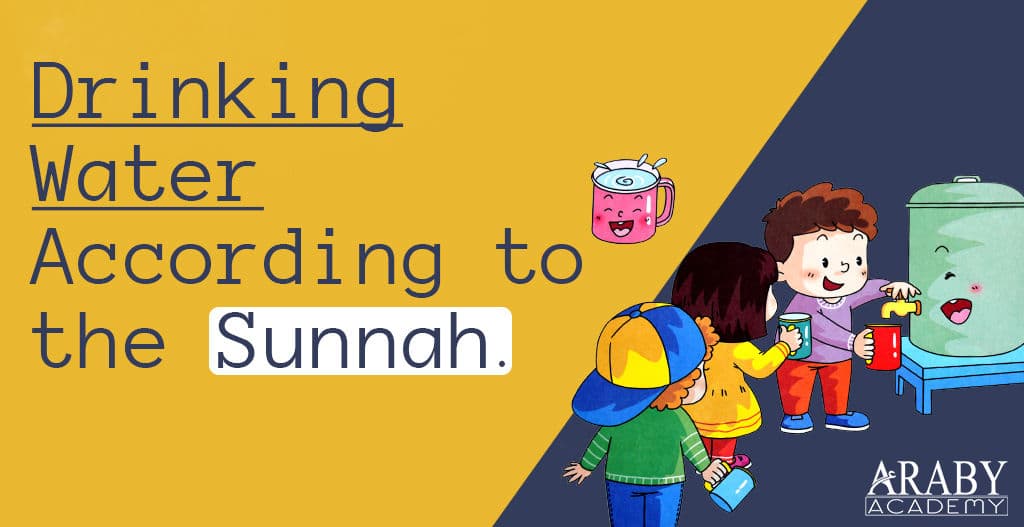
The Theology of Water: Returning to the Source of Life
Before we even lift a glass to our lips, before the coolness of water touches the tongue, there is a deeper reality we often overlook: water is not merely a substance—it is a sign.
In my study of the Qur’an and the Sunnah, I found that water is consistently framed not as something ordinary, but as something foundational. Allah says:
“And We made from water every living thing.” (Qur’an 21:30)
This is not poetic exaggeration. It is a statement of ontological truth. Every cell in your body, every biological function, every breath you take is sustained by this simple, transparent liquid. Yet the Qur’an does not just present water as a biological necessity—it presents it as a theological reminder.
Water is life. And life is a trust.
Water as a Divine Sign (Āyah)
The Arabic word for “sign” in the Qur’an is āyah—the same word used for verses of revelation. Water, then, is not just a physical reality; it is a verse you can touch.
When rain falls, it is described as raḥmah (mercy). When water revives dead land, it becomes a metaphor for resurrection. When rivers flow in Jannah, they symbolize eternal satisfaction.
As I was drinking water today, I paused and reflected:
How often do I consume this “living āyah” without awareness?
We live in a time of abundance—clean water flows from taps, bottled and branded. But in 7th-century Arabia, water was survival. Wells defined settlements. Caravans were planned around water sources. Scarcity sharpened appreciation.
The Prophet ﷺ lived in that world of scarcity, yet his relationship with water was not driven by fear of shortage—but by presence and gratitude.
And this is where the Sunnah transforms everything.
Because the Sunnah does not just teach you what to do—it teaches you how to be.
Sunnah #1: Mentioning the Name of Allah (Tasmiyah)
“Bismillah” — The Opening of Every Blessing
The first Prophetic instruction before drinking is simple, almost deceptively so:
Say “Bismillah.”
(In the name of Allah.)
But simplicity, in the Prophetic tradition, often conceals immense depth.
The Linguistic Power of “Bismillah”
Let us slow down and unpack this phrase.
“Bism” (بِاسْمِ) comes from the root s-m-w, which relates to elevation and distinction. A name is not just a label—it is something that gives meaning, identity, and direction.
“Allah” is the proper name of the Divine, encompassing all attributes of perfection.
So when you say Bismillah, you are not merely uttering a ritual phrase. You are aligning your action with Divine consciousness.
You are, in essence, saying:
“I am not acting independently. I begin this act in awareness of the One who gave me this water, this body, and this moment.”
The Spiritual “Frequency” of Tasmiyah
There is a subtle transformation that happens when you say Bismillah before drinking.
Without it, drinking is instinctive—automatic, almost animalistic.
With it, drinking becomes intentional—elevated, sacred.
In hadith literature, we find that mentioning Allah’s name acts as a form of protection and blessing. It places a barrier between you and heedlessness. It transforms consumption into worship.
As a researcher, I found it fascinating how this aligns with modern discussions around mindful eating and intentional living. Today, wellness experts encourage pausing before meals, expressing gratitude, and being present.
The Sunnah did this 1,400 years ago—with a single word.
Barakah: The Hidden Multiplier
One of the most profound concepts tied to Bismillah is barakah (blessing).
Barakah is not just “more”—it is better. It is when something small suffices. When something simple nourishes deeply. When something ordinary carries extraordinary impact.
By saying Bismillah, you are inviting barakah into your act of drinking.
And I often ask myself:
How much of what we consume today is physically sufficient but spiritually empty?
The Sunnah restores that lost dimension.
Sunnah #2: Drinking with the Right Hand
The Ethics and Symbolism of Direction
The second Sunnah is equally simple:
Drink with your right hand.
At first glance, this may seem like a matter of etiquette. But in my study of Islamic jurisprudence (Fiqh) and Prophetic symbolism, I found layers of meaning embedded within this instruction.
The Fiqh Perspective: Obligation or Recommendation?
Scholars have discussed this practice extensively.
There is a well-known hadith where the Prophet ﷺ said:
“None of you should eat or drink with his left hand, for indeed Shayṭān eats and drinks with his left hand.”
(Sahih Muslim)
Because of the strength of this wording, many scholars—including those of the Hanbali school—consider eating and drinking with the right hand to be obligatory (wājib) unless there is a valid excuse (such as injury).
Others view it as a highly emphasized Sunnah (sunnah mu’akkadah).
But beyond legal classification, the consistent message is clear:
This is not a trivial detail. It is a defining aspect of Prophetic etiquette.
The Symbolism of the Right (Yamīn)
In Arabic, the word for right is yamīn (يمين), which shares roots with meanings of:
Blessing (barakah)
Strength
Oath and trust
The Qur’an frequently associates the “people of the right” (aṣḥāb al-yamīn) with success and salvation.
The right side, in Islamic symbolism, represents:
Purity
Honor
Favor
The left side, by contrast, is associated with lesser or impure tasks (like cleaning oneself after using the restroom).
So when you choose your right hand to drink, you are not just following etiquette—you are embodying a worldview.
You are choosing order over chaos.
Intentionality over habit.
Honor over carelessness.
Embodied Ethics: Training the Soul Through the Body
One of the most beautiful aspects of the Sunnah is how it uses the body to train the soul.
Think about it:
Switching hands is not difficult. But remembering to switch hands requires awareness.
And awareness is the foundation of spirituality.
As I practiced this consistently, I noticed something subtle:
My actions became slower, more deliberate. I was no longer just doing things—I was witnessing myself doing them.
And this is where the Sunnah intersects with what modern psychology calls habit reprogramming.
Small, repeated actions—done with intention—reshape identity.
Personal Reflection: The Return of Awareness
I want to pause here, not as a lecturer, but as a fellow traveler.
When I first began consciously implementing these two Sunnahs—saying Bismillah and using my right hand—I expected a sense of religious fulfillment.
What I did not expect was a transformation in presence.
At first, I would forget. I would reach for the glass absentmindedly, take a sip, and only afterward remember. There was a quiet disappointment in that.
But over time, something shifted.
The moment before drinking became a checkpoint of consciousness.
I began to notice:
The texture of the glass in my hand
The clarity of the water
The sensation of thirst itself
And most importantly, I began to feel a subtle sense of gratitude—not forced, not performative, but emerging naturally.
It was as if these small Sunnahs were gently pulling me out of autopilot.
In a world obsessed with productivity and speed, the Sunnah invited me to slow down.
To be present.
To remember.
And perhaps this is the deeper wisdom:
The Prophet صلى الله عليه وسلم did not just teach us how to drink water.
He taught us how to be human again.
Sunnah #3: Drinking in Three Breaths (ثلاثة أنفاس)
Between Thirst and Fulfillment — A Prophetic Rhythm
As I continued studying the hadith corpus on daily practices, I noticed something subtle yet profound: the Prophet ﷺ did not rush even the most basic human acts.
He slowed them down.
And nowhere is this more beautifully expressed than in the Sunnah of drinking in three breaths.
The Prophetic Instruction: A Measured Way to Drink
Anas ibn Mālik (رضي الله عنه) narrates:
“The Messenger of Allah ﷺ used to breathe three times while drinking and said: ‘It is more thirst-quenching, more wholesome, and healthier.’”
In another narration, the method becomes even clearer:
Take a sip
Move the vessel away
Breathe outside the cup
Repeat this three times
This is not merely about pausing. It is about creating a rhythm—a sacred cadence between intake and reflection.
And notice something precise:
The Prophet ﷺ did not breathe into the vessel. He separated breath from consumption.
This distinction, as simple as it sounds, carries both spiritual etiquette and physiological wisdom.
The Linguistic Depth: What Does “Al-Irwā’” Really Mean?
In the hadith, the Prophet ﷺ describes this method as:
“Arwā” (أروى) — more thirst-quenching
Let us pause here, because the Arabic language opens a door that translation often closes.
Root Analysis: ر و ي (R-W-Y)
The word arwā comes from the root ر و ي (rawiya), which carries meanings such as:
To quench thirst deeply
To irrigate until satisfaction
To narrate (as in transmitting knowledge)
This last meaning may surprise you.
But in classical Arabic, rawiya al-ḥadīth means to transmit a narration. Why? Because knowledge, like water, flows, and when received properly, it satisfies an inner thirst.
So when the Prophet ﷺ says “it is more arwā”, he is not just speaking about physical hydration.
He is pointing to a deeper experience:
A form of drinking that reaches the core, not just the surface.
Al-Irwā’ vs. Mere Drinking
There is a difference between:
Shurb (شرب) — to drink
Irwā’ (إرواء) — to be fully quenched
Modern life has trained us in shurb:
Quick consumption. Immediate relief. No awareness.
The Sunnah trains us in irwā’:
Gradual satisfaction. Deep absorption. Presence.
And I found, in my own practice, that when I rushed, I drank more—but felt less satisfied.
When I slowed down, I drank less—but felt truly quenched.
The Scientific Perspective: The Wisdom of Pausing
Now, let us step into a different lens—the language of physiology.
Because what fascinates me, as both a researcher and a reflective practitioner, is how seamlessly the Sunnah aligns with the human body.
1. Respiratory–Digestive Coordination
When you drink continuously in one gulp, several things happen:
The epiglottis (a small flap in your throat) must rapidly coordinate between breathing and swallowing
The body suppresses breathing temporarily
The stomach receives a sudden influx of fluid
This creates a mild internal stress response.
But when you drink in intervals, with pauses:
Breathing normalizes between sips
The nervous system remains calm
Oxygen flow is uninterrupted
In modern terms, this supports parasympathetic activation—the “rest and digest” state.
And here is the fascinating part:
The Sunnah, 1,400 years ago, structured drinking in a way that naturally supports this optimal physiological state.
2. Gradual Hydration vs. Shock Intake
When water enters the stomach too quickly:
It can dilute stomach acids abruptly
It may pass through the system without optimal absorption
The sensation of thirst may persist despite intake
But when consumed in intervals:
The body has time to register hydration
Cellular absorption improves
The brain receives feedback signals of satisfaction
Which brings us back to the word:
“Arwā” — truly quenching.
3. Protection from Contamination
The Prophet ﷺ also forbade breathing into the vessel.
Scholars explain this from a hygiene perspective:
Breathing into water can introduce microdroplets
It may alter taste or introduce contaminants
It affects shared drinking etiquette
As classical scholars noted, this prevents the water from being affected by saliva or odor
Today, we might call this basic respiratory hygiene.
Again, the Sunnah anticipated what modern health science now confirms.
A Deeper Reflection: The Psychology of Thirst
Let me speak to you not as a lecturer, but as someone who tried this consciously.
The first time I truly practiced drinking in three breaths—not mechanically, but with awareness—I noticed something unexpected.
My thirst changed.
Not physically at first—but psychologically.
I realized that much of what I call “thirst” is actually urgency, not need.
The first sip satisfies the body.
The second sip satisfies the system.
The third sip satisfies something deeper—the النفس (inner self).
And in those pauses between sips, something beautiful happens:
You become aware of sufficiency.
The Sunnah as a Discipline of Slowness
If I were to summarize this Sunnah in one phrase, it would be this:
The discipline of not rushing relief.
We live in a world that trains us to eliminate discomfort instantly:
Thirst → drink immediately
Hunger → eat quickly
Stress → distract instantly
But the Prophet ﷺ introduces a different paradigm:
Pause.
Separate.
Return.
Sip.
Breathe.
Reflect.
This is not just about water.
It is about retraining the soul.
Connecting It All Together
When you combine what we’ve covered so far:
Bismillah — aligns the act with Allah
Right hand — aligns the body with Prophetic order
Three breaths — aligns the rhythm with human nature
You begin to see a pattern.
The Sunnah is not random etiquette.
It is a complete system of embodied mindfulness.
Sunnah #4: Drinking While Sitting vs. Standing
Understanding Ikhtilāf, Context, and the Human Wisdom of Posture
As I moved deeper into the hadith literature on everyday actions, I encountered a topic that initially seemed contradictory—but ultimately revealed the flexibility and humanity of the Sunnah:
Should you drink while sitting… or standing?
At first glance, the narrations appear to pull in different directions. Some strongly discourage drinking while standing. Others clearly show the Prophet ﷺ doing so.
But as with many areas in Fiqh, what appears as contradiction is often complementarity—a deeper system that requires context, nuance, and humility.
Let’s walk through it together.
The Hadith Landscape: Two Sets of Narrations
1. Narrations Discouraging Standing
Anas ibn Mālik (رضي الله عنه) reports:
“The Prophet ﷺ forbade drinking while standing.”
(Sahih Muslim)
In another narration:
“If one of you drinks while standing, let him vomit.”
(Sahih Muslim)
These narrations are strong in wording. They establish a clear dislike—if not prohibition—of drinking while standing.
2. Narrations Permitting (and Demonstrating) Standing
At the same time, we find authentic reports such as:
The Prophet ﷺ drank Zamzam while standing
Ibn ‘Abbās (رضي الله عنهما) said:
“I gave the Prophet ﷺ Zamzam water, and he drank it while standing.”
(Sahih al-Bukhari)
So now the question becomes:
How do we reconcile these two?
The Fiqh of Ikhtilāf: How Scholars Understood This
In my study of the classical jurists, I found that this issue became a textbook example of Ikhtilāf (legitimate scholarly difference).
View 1: Standing is Disliked (Makrūh), Sitting is Preferred
This is the majority position (jumhūr), including:
The Hanafi school
The Shafi'i school
The Hanbali school
They argue:
The prohibition indicates discouragement (karāhah), not absolute prohibition
The Prophet’s ﷺ act of drinking while standing shows it is permissible when needed
So the conclusion:
Sit when you can. Stand when you must.
View 2: No Dislike — Both Are Equally Permissible
Some scholars, particularly within the Maliki school, viewed the matter differently.
They emphasized:
The Prophet ﷺ did both, which indicates broad permissibility
The prohibition may be interpreted as guidance toward better etiquette, not a discouragement with legal weight
A Third Layer: Contextual Interpretation
Many scholars offered a reconciliation that I personally find deeply compelling:
The Prophet ﷺ preferred sitting as the norm
He drank standing occasionally to:
Show permissibility
Address specific situations (crowds, travel, limited space)
In other words:
The Sunnah is not rigid—it is instructional and liberating at the same time.
Why Did the Prophet ﷺ Do Both?
This is where the Sunnah reveals its brilliance.
The Prophet ﷺ was not only teaching rules—he was shaping a balanced human being.
1. To Prevent Hardship (رفع الحرج)
If he ﷺ had only drunk while sitting, the community might assume:
Standing is sinful
Situational flexibility is not allowed
But by occasionally drinking while standing, he removed that burden.
This aligns with a central Qur’anic principle:
“Allah does not intend for you hardship…” (Qur’an 2:185)
2. To Establish a Hierarchy, Not a Binary
The Sunnah often operates on levels:
Best (Afdal)
Permissible (Mubāḥ)
Sitting is the best.
Standing is allowed.
This distinction is crucial—because it teaches you to aspire without becoming rigid.
3. To Reflect Real Human Life
Let’s be honest:
Life is not always ideal.
You are at a crowded event
You are walking
You are in transit
You are physically unable to sit
The Prophet ﷺ lived among people—not in isolation. His practice reflects real human conditions, not theoretical perfection.
And that is why the Sunnah feels livable.
The “Human” Wisdom: Why Sitting Is Preferred
Now let’s move beyond Fiqh into something more intimate:
Why does sitting feel better?
Why did the Prophet ﷺ prefer it?
1. The Physiology of Calm Consumption
When you sit:
Your body naturally enters a more stable, relaxed posture
The nervous system shifts toward parasympathetic mode (“rest and digest”)
Digestion begins more smoothly
When you stand—especially if moving:
The body remains in a mild state of alertness
Digestion is not prioritized
Intake becomes more hurried
Modern wellness culture emphasizes:
“Sit down when you eat. Be present.”
The Sunnah said this centuries ago—without needing a laboratory.
2. The Psychology of Presence
Standing often implies:
Urgency
Transition
Distraction
Sitting implies:
Pause
Stability
Intention
As I began consciously sitting to drink—even when it felt unnecessary—I noticed something subtle:
The act slowed me down.
It created a micro-moment of stillness in an otherwise fast-moving day.
And in that stillness, awareness returned.
3. The Ethics of Dignity and Adab
In classical Islamic thought, posture reflects inner states.
Sitting to eat or drink is associated with:
Tawāḍu‘ (humility)
Adab (refined etiquette)
Intentional living
It is not about restriction—it is about honoring the act.
Because even drinking water, in the Prophetic worldview, is not trivial.
4. Training Against Impulsiveness
There is a deeper, almost hidden wisdom here.
Choosing to sit—even when you could stand—is an act of:
Delaying immediacy.
And that is powerful.
Because much of human struggle comes from:
Acting too quickly
Consuming without awareness
Reacting without reflection
The Sunnah gently retrains you:
Pause. Sit. Then drink.
The Lost Art of Pausing
I’ll share something I noticed in my own practice.
Before consciously applying this Sunnah, I drank water almost exclusively while standing:
At my desk
Walking between tasks
In a rush
It was efficient—but empty.
When I began sitting, even briefly, it felt… unnecessary at first.
Then slowly, it became something else:
A ritual of return.
A moment where I stepped out of motion and into awareness.
And over time, I realized:
It wasn’t about the water.
It was about interrupting the chaos of the day with intention.
Conclusion: From Water to Worship — The Sunnah as Adab in Motion
As we reach the end of this exploration, I want to invite you to step back for a moment.
Not as a reader.
But as someone holding a glass of water.
Because everything we’ve discussed—Bismillah, the right hand, three breaths, sitting—can feel like a checklist if we’re not careful.
But the Sunnah was never meant to be a checklist.
It was meant to be Adab.
What is Adab, Really?
In my study of Islamic tradition, I found that the word Adab (أدب) is far richer than its common translation, “etiquette.”
Its root carries meanings of:
Refinement
Discipline
Cultivation of the self
Adab is not just what you do.
It is how you exist in relation to:
Allah ﷻ
Other people
Even the simplest blessings—like water
Imām Mālik (رحمه الله) is famously reported to have said:
“Learn adab before knowledge.”
Why?
Because knowledge without adab can make you rigid.
But adab with knowledge makes you beautiful.
The Sunnah as Living Adab
When you look at the Sunnah of drinking, something remarkable emerges.
Each small action is not random—it is a layer of adab:
Bismillah → Adab with Allah
You acknowledge the Source before the blessing
Right hand → Adab with the body
You align your actions with honor and intentionality
Three breaths → Adab with the self
You respect your body’s rhythm and need for calm
Sitting → Adab with the moment
You give the act the dignity of presence
Individually, they seem small.
Together, they form a complete philosophy of living.
How a Simple Act Becomes ‘Ibadah
Now we arrive at the heart of your question:
How does drinking water become worship (‘Ibādah)?
In Islamic theology, ‘Ibādah (عبادة) is not limited to prayer, fasting, or pilgrimage.
At its core, ‘ibādah is:
Any act done with awareness of Allah, in accordance with His guidance.
So what transforms a habit into worship?
1. Intention (Niyyah)
When you drink water absentmindedly, it is hydration.
When you drink it with awareness—
“I am following the Sunnah. I am grateful to Allah.”—
It becomes ‘ibādah.
The action is the same.
The meaning is entirely different.
2. Alignment with the Prophetic Way
The Prophet ﷺ said:
“Whoever revives my Sunnah has loved me…”
Every time you choose to:
Say Bismillah
Sit instead of rush
Sip instead of gulp
You are not just acting—you are imitating.
And imitation, in Islam, is a form of love.
3. Presence (Ḥuḍūr)
One of the greatest losses of modern life is presence.
We eat while scrolling.
We drink while thinking ahead.
We live in fragments.
The Sunnah restores wholeness.
When you pause, sit, breathe, and remember Allah—
you gather your scattered attention into a single moment.
And that moment becomes sacred.
The Hidden Transformation: From Consumer to Servant
There is a deeper shift that happens when you live this way.
You stop being a consumer of blessings
and become a servant who receives them.
And there is a difference.
A consumer takes.
A servant recognizes.
A consumer rushes.
A servant pauses.
A consumer asks, “Is this enough?”
A servant says, “Alḥamdulillāh.”
The Glass That Changed Me
I’ll leave you with something personal.
There was a time when drinking water was the most forgettable part of my day.
No thought. No pause. No meaning.
But as I slowly implemented these Sunnahs—not perfectly, but consistently—I noticed something unexpected:
My life began to feel… slower.
Not in productivity—but in awareness.
Moments that once passed unnoticed began to carry weight.
A sip of water became:
A reminder of نعمة (blessing)
A pause in chaos
A quiet act of devotion
And I realized something I had read many times but never fully lived:
The path to Allah is not always in grand gestures.
It is often hidden in the smallest acts—done with sincerity.
Your Invitation
So the next time you feel thirsty, I invite you to try something different.
Not as an obligation.
But as an experiment in presence.
Sit down
Say Bismillah
Hold the glass with your right hand
Drink in three breaths
Pause between each sip
And ask yourself:
What changes when I choose awareness over habit?
Because in that moment, you are not just drinking water.
You are practicing Adab.
You are embodying the Sunnah.
You are engaging in ‘Ibādah.
And perhaps, without realizing it—
You are becoming the kind of person the Sunnah was always meant to shape.